The job, beyond the title.
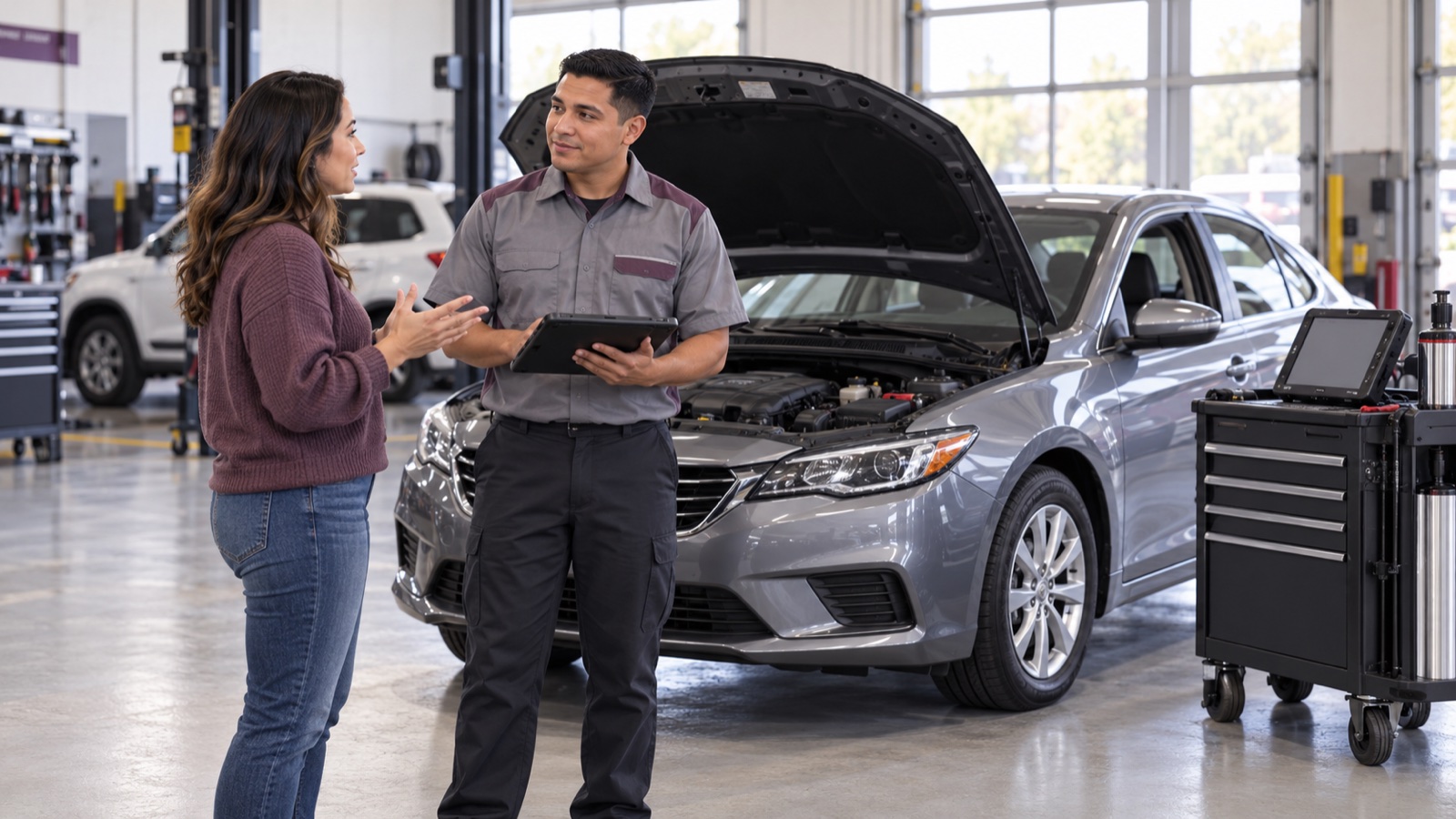
Automotive technicians maintain and repair cars and light trucks. Mechanical parts share the job with sensors, wiring, and computers. Strong diagnostic work also means documenting the evidence, checking the repair, and explaining it clearly to the customer.
What the work includes
- Diagnose problems using test equipment, service information, and hands-on inspection.
- Maintain and repair mechanical and electronic vehicle systems.
- Document the work, verify the result, and communicate with customers or service staff.
Read the wage carefully.
U.S. median annual wage
May 2025 · before taxes
Automotive Service Technicians and Mechanics
SOC 49-3023
This occupation does not represent diesel and heavy-truck mechanics, shop revenue, or owner profit. The median is the midpoint for the occupation: half of workers earn more and half earn less. It includes experienced workers.
Not a starting offer. No actual entry-level offer or all-in training cost is verified for this page. Use a written offer and your own expenses for a personal comparison. Self-employed earnings are outside these wage estimates.
The route in.
Training plus practice
Automotive study and supervised hands-on learning are common routes. Some people enter as helpers or trainees and learn with an employer. Compare the equipment, schedule, total costs, and employer connections of each option. Primary source ↗
ASE certification
Professional ASE certification requires passing the relevant tests and meeting applicable experience requirements or qualifying training-and-experience combinations. An exam pass alone is not the full credential; Entry-Level ASE follows separate rules. Primary source ↗
Task-specific requirements
Air-conditioning service can carry task-specific training and certification requirements. Check EPA Section 609 and any applicable state rules for the work you plan to do. Primary source ↗
What shapes the working week.
- Work can involve standing, awkward positions, tools, fluids, noise, and vehicles on lifts.
- Pay may be based on paid clock hours or credited work. Ask how diagnosis, parts delays, training, and rechecks are paid.
- Technicians often provide hand tools. Find out what the employer supplies before buying equipment.
- Evenings and weekends may be part of the schedule.
Put the job in a place.
Start with a real job location and a household of the same size. Compare the commute, housing options, and the schedule you would actually work. A state wage average cannot tell you what one address will cost.
Use take-home pay from an actual offer or pay statement in your monthly picture. Keep relocation costs and one-time training expenses separate from recurring bills.
Build your monthly pictureBring these questions.
- Is pay hourly, flat rate, or a combination? Show me an ordinary week's calculation.
- How are diagnostics, parts delays, training, and rechecks paid?
- Which tools must I supply, and what does the shop provide?
- What training is offered for newer vehicle systems?
- What hours, benefits, and guarantees are stated in writing?
Sources & editorial notes.
Adapted November 4, 2026, from the existing episode research. Wage edition: May 2025. Original source checks: 2026-10-31. Links lead to primary sources that may have updated since the episode was prepared.
- BLS — Automotive Service Technicians and Mechanics ↗May 2025 wages; 2025–2035 employment projection
- ASE — Work Experience Requirements ↗Requirements checked October 31, 2026
- EPA — Section 609 Technician Training and Certification ↗Requirements checked October 31, 2026
- O*NET — Automotive Service Technicians and Mechanics ↗Tasks checked October 31, 2026
This is an educational overview. Confirm current program terms and professional requirements with the relevant authority before making a decision.