This is an assessment of a possible future expansion, not exterior-washing instruction. Keep the core offer at assessed light-soil interior maintenance. Use D17 only to evaluate the separate proposal; reading it, buying recovery equipment or completing the interior course does not establish an exterior operating qualification or approved route.
This is a planning and evidence checklist, not an exterior washing procedure, chemical recipe, equipment specification or practical qualification. EXT-HOLD-01 is an independent fictional unsupported proposal. No exterior method, receiving approval, physical route, customer permission or practical demonstration has been obtained for it.
Open the full-size illustration
Illustration sources: CASE-D-01.
Define the different service before offering it
Identify the proposed vehicle, condition, result and exclusions separately from the interior agreement. An exterior request can introduce different materials, equipment, products, water movements and property obligations. The interior case's selected vacuum, cloth practice and prices do not establish suitability for those tasks.
- Record the exact proposed method, current vehicle and product instructions, equipment configuration and material compatibility still requiring assessment. Include coatings, altered glass and existing damage where relevant.
- Identify the additional instruction and permitted observed practice needed. Keep unsupported operations on HOLD; do not promise a result from a product name or a customer photograph.
Check the actual property and jurisdiction
Portland's Mobile Washer Program illustrates a local authorization with collection, approved receiving and exterior-surface limits. It is not permission for the Vancouver teaching case, another jurisdiction, interior extraction or cloth laundry. EPA's vehicle-washing sheet is municipal outreach guidance; it supplies no individual permit or universal lawn or sewer disposal rule.
- Identify the actual property authority, jurisdiction, drains, surface gradients and operational restrictions. Establish who can permit the activity and which public requirements apply before an agreement depends on them.
- Resolve how the proposed operation prevents an uncontrolled release. A waterless, rinseless or biodegradable label does not itself answer product, residue, collection or receiving questions.
Describe every flow through capture and transfer
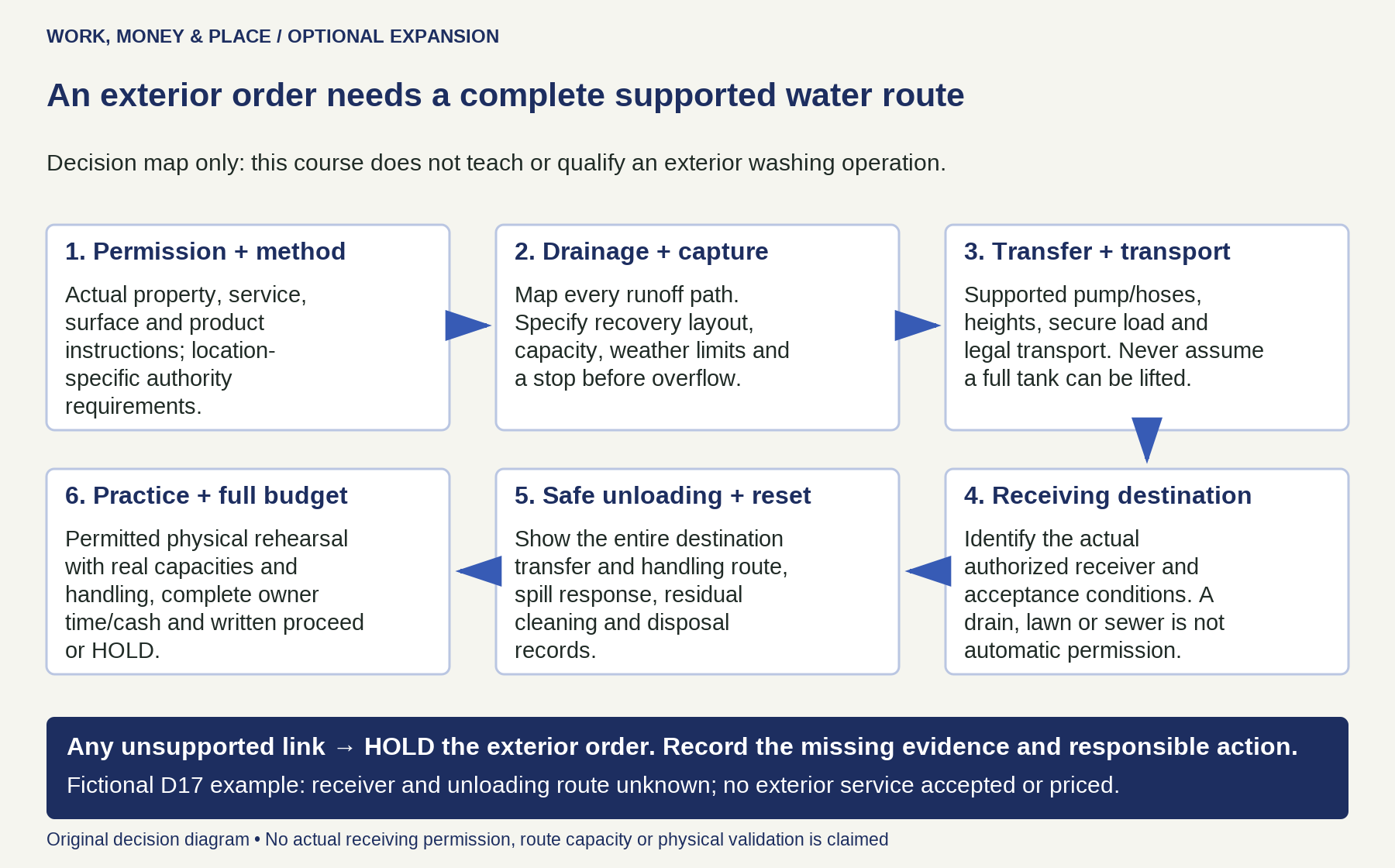
Draw the proposed chain from application through containment, collection, intermediate transfer and final receipt. Include wash, rinse, equipment cleanup, retained liquid, spills and any unloading or reset flows the actual design creates. Buying a mat or pump does not demonstrate that the complete chain works.
- Identify the actual quantities, usable capacities, collection throughput, transfer steps, receiving rate and interruption arrangements requiring evidence. Assess the whole appointment sequence, not just one container at rest.
- Keep unknown values unresolved. Obtain a suitably permitted full-cycle trial of the actual arrangement; record observed losses, delays and stop conditions. No quantity, recovery percentage, batch count or handling time is supplied here.
Name the receiver and its actual acceptance
Collection is not the endpoint. Identify a real proposed receiving destination and the parties responsible for accepting and regulating the actual waste stream. A convenient sink, drain or property owner's consent alone does not establish that acceptance.
- Obtain the applicable written permission and acceptance conditions for the actual products, soil and waste characteristics, quantities, timing and delivery method. Resolve any required characterization, pretreatment or prohibited contents with the responsible authority and receiver.
- Record the receiving point, unloading arrangement, hours, limits, documentation and fallback when acceptance is unavailable. Keep transfer and receipt records linked to the correct job. No receiver has been selected or contacted by this course.
Assess storage transport and unloading
Assess every movement between the job and the receiver, including loading, storage, transport, unloading and cleaning or reset afterward. A collection system that cannot be moved or emptied under supported conditions remains incomplete.
- Verify actual filled loads, vehicle capacity, securement, container compatibility, separation, clearances and individual handling. Identify suitable equipment and competent assistance only where the actual task requires them.
- Plan leakage, spill response, unavailable access and equipment failure. Demonstrate the complete arrangement under permitted conditions before relying on it; a diagram is not a physical load or spill-control test.
Fund the whole cycle and issue one decision
Price preparation, travel, service, capture, transfer, delivery, unloading, administration and reset once. Add actual equipment, consumables, permissions, receiving charges, transport, coverage, instruction and practice costs and their payment dates. The interior case supplies no exterior financial allowance or production benchmark.
- Use a separate estimate and dated cash plan; preserve the original interior scope and household protection. Obtain a supported customer agreement before any different work or charge.
- Keep EXT-HOLD-01 on HOLD: its method, property permissions, complete capacity trial, receiving acceptance and funded competence are absent. Assign each missing item an owner and review trigger. Proceed only with supported actual evidence, or decline the expansion.